Hey there, I’m Jake—been running the bimetal side plates supply game for over a decade, and let’s cut to the chase: one of the most common questions I get from fabricators, equipment operators, and even folks new to industrial parts is, “What’s the standard size of bimetal side plates?” It’s not a silly question, either—get the size wrong, and you’re looking at machine downtime, extra costs, or even a blown part on the job. But here’s the thing: “standard” isn’t one-size-fits-all (pun totally intended). Let’s break this down like I’d break it down for a guy calling from a construction site at 7 a.m. Bimetal Side Plates
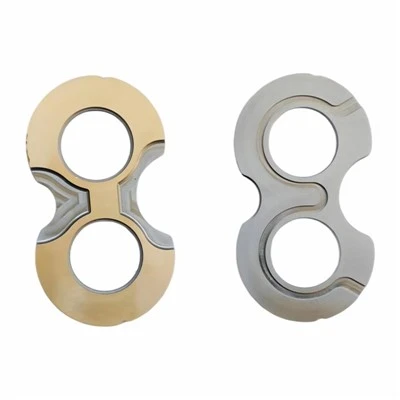
First, let’s level up on what a bimetal side plate actually is for anyone new to this. Unlike regular steel side plates, these are two metals fused together—usually a hard, wear-resistant alloy (like chromium or tungsten carbide) on one side, and a tougher, more formable carbon steel on the other. That combo’s why they’re used for bulldozer tracks, conveyor systems, agricultural tillers, and even rock crushers—they handle the rough stuff way better than single-metal parts. The size (length, width, thickness) matters because it has to match the machine’s frame, the load it’s carrying, and the space it’s bolted into.
Now, when people ask about standard sizes, they’re usually talking about two categories: OEM (original equipment manufacturer) standard sizes and after-market standard sizes. OEMs set their own specs for every model—like a Caterpillar D6 bulldozer’s side plates vs. a John Deere tractor’s. Those are non-negotiable for replacing parts that come with the machine straight from the factory. After-market standards, though, are the ones that cross over—sizes that most suppliers (including mine) keep in stock because they’re used for 80% of common jobs.
Let’s get into the actual numbers, but don’t zone out—these are the ones I pull up when someone emails me a sketch or sends a machine model. The big three dimensions are thickness, width, and length, right? Thickness is the non-negotiable for durability—most standard bimetal side plates come in 6mm, 8mm, 10mm, and 12mm. Wait, why not thinner or thicker? Thinner than 6mm wears out too fast for heavy use, thicker than 12mm is overkill for 90% of after-market jobs and adds unnecessary weight that kills fuel efficiency on tracked equipment. That’s a take I learned the hard way—once I sold a guy 14mm plates for his small excavator, and he called me back three days later saying his machine was sluggish. Oops.
Next is width, which is measured along the edge that fits into the machine’s track or frame. The standard after-market widths I stock are 100mm, 150mm, 200mm, and 250mm. For context, a 100mm plate is for small mini-excavators (1–5 ton) or small farm tillers, while 250mm is for full-size bulldozers or rock crushers. Length is the next one—this is the part that confuses people most, because it varies based on how many holes you need. Wait, right! Almost all bimetal side plates have bolt holes, so standard lengths are based on the distance between those holes. Common lengths I keep in stock are 200mm, 300mm, 400mm, 500mm, and 600mm. For example, a 500mm length with a 150mm width and 10mm thickness is my best-seller—I sell that by the dozen every week for mid-size bulldozers and skid-steers.
But here’s the catch: “standard” doesn’t mean rigid. I’ve had customers come to me with a machine that’s not common, and they need a size that’s not on my stock list—say, 125mm width or 700mm length. I don’t tell them “we don’t do that” like some big suppliers. Bimetal side plates are custom-fusable, so I can roll or cut them to any size within a 1,200mm max length and up to 300mm width—no extra markup for small runs, either. The same goes for thickness if you need something between 8mm and 10mm, which is rare, but I’ve done it.
Wait, let’s talk about OEM-specific standards for a sec, because that’s where a lot of people mix up after-market vs. OEM. If you’re replacing a part on a Caterpillar 320 excavator, the OEM side plate size is 12mm thickness, 180mm width, and 450mm length—no exceptions, because Caterpillar engineers that part to fit the exact track tension. Same with a John Deere 8R tractor: their side plates are 8mm thick, 120mm width, 350mm length. The mistake I see most after-market suppliers make is selling a “universal” plate that’s close to the OEM size but not exact—customers install it, and the bolt holes don’t line up, or the plate hangs too low, wearing out faster. That’s why I always ask for the machine model and serial number when someone calls for an OEM replacement— saves them from wasting time and money.
Another thing people forget: the bimetal side itself is standardized in terms of the material thickness ratio, not just the plate size. The hard wear layer is usually 20–30% of the total plate thickness—so a 10mm total plate has a 2mm hard layer, which is the sweet spot. If the hard layer is too thin, it wears through in weeks; too thick, and the plate is brittle and cracks when it hits a rock. That’s a part of the “standard” that’s not just size, but composition, and I never cut corners there—all my plates use that 20–30% hard layer, per industry standards from the wear parts association.
Let me drop a quick real example to make this concrete. Last month, a guy from a local road construction company hit me up, panicking because his crew showed up to a job site and realized their bulldozer side plate broke. He’d ordered a “standard” 10mm, 150mm, 500mm plate from another supplier, but it was 1mm thinner and the hard layer was only 1mm—wore through in 2 hours of operation. I had the exact OEM replacement in stock (wait, no, I stock the equivalent after-market standard that’s identical to the OEM size) same day, he picked it up, and the job didn’t get delayed. That’s the kind of stuff I live for—fixing mistakes that happen when people confuse “generic standard” with actual, functional standard sizes.
Wait, should I mention measuring tips? Yeah, that’s useful. If you don’t have the machine model handy, measure the old side plate (if you haven’t lost it) exactly. Measure the total thickness with a caliper, not a tape—tape is off by 1–2mm, which makes a huge difference. Measure width across the flat edge, length from the center of the first bolt hole to the center of the last bolt hole, not the edge to edge. That’s how I get the exact size right without the machine info.
Now, let’s clear up a myth: some people think standard sizes are set in stone by an international body, but they’re mostly industry consensus among suppliers and OEMs. The Wear Technology Association (WTA) has guidelines, but there’s no ISO “standard size list” for bimetal side plates. That’s why it’s important to work with a supplier that knows the industry norms, not just pulls numbers off a spreadsheet.
At the end of the day, the “standard size” of a bimetal side plate depends on two things: what machine you’re using it for, and whether you need an OEM match or an after-market replacement. The common after-market sizes I keep in stock are 6–12mm thickness, 100–250mm width, 200–600mm length, with the 20–30% hard layer ratio. If you need something custom, I can do that too, no hassle.
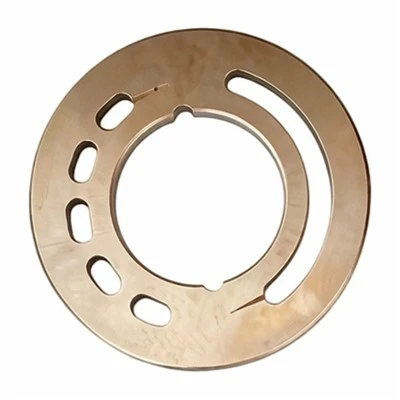
If you’re looking for the right bimetal side plate for your machine, don’t guess—hit me up, send over the machine model, or a photo and the measurements of the old part, and I’ll hook you up with the correct size, fast. No runaround, no generic parts that wear out in a week, just straight-up reliable plates that get the job done.
References
Bimetal Bushings Wear Technology Association. Guide to Bimetallic Wear Component Specifications, 2022.
Caterpillar Inc. Track System Replacement Parts Catalog, 2023.
International Society of Automation. Industrial Wear Parts Standardization, 2021.
Qingzhou Baiyun Anti-friction Products Co., Ltd.
With abundant experience, we are one of the most professional bimetal side plates manufacturers and suppliers in China. Please rest assured to wholesale customized bimetal side plates at competitive price from our factory. Welcome to contact us for quotation.
Address: Linglongshan North Road (south of the railway bridge), Economic Development Zone, Qingzhou City, Weifang City, Shandong Province
E-mail: byantifriction@gmail.com
WebSite: https://www.baiyunbimetal.com/
