Hey there! I’m a supplier in the biofuel pellet line business. Today, I wanna chat about one of the key players in our setup: the pellet mill. So, what’s the deal with the function of a pellet mill in a biofuel pellet line? Let’s dig in! Biofuel Pellet Line
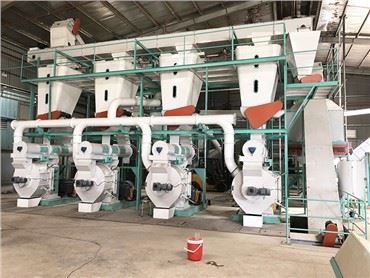
First off, let’s understand the basic concept of biofuel pellets. These pellets are made from all sorts of biomass materials like wood chips, sawdust, straw, and even agricultural waste. They’re a clean and renewable energy source, and they’ve been gaining popularity big time in recent years. A biofuel pellet line is a whole system designed to turn these raw biomass materials into those handy little pellets. And the pellet mill is like the heart of this system.
The main function of a pellet mill is to convert the loose biomass material into dense, cylindrical pellets. Think of it as a kind of magic machine that takes all that messy, airy stuff and compresses it into a solid, uniform shape. This is super important because the pellets are much easier to store, transport, and use compared to the loose biomass.
When the biomass material first enters the pellet mill, it goes through a pre – treatment process. This might involve grinding the material to a proper size if it’s too big. The right particle size is crucial because it affects how well the material can be compressed into pellets. If the particles are too large, the pellets won’t hold together properly. If they’re too small, it can cause problems with the flow of the material through the mill.
Once the biomass is at the right particle size, it’s time for the real action in the pellet mill. Inside the mill, there are usually two main components: the die and the rollers. The die is a circular plate with a bunch of small holes in it. The rollers press the biomass material against the die. As the material is forced through these holes, it gets compressed and takes on the shape of the holes, forming those nice, round pellets.
The pressure applied during this compression process is really high. This high pressure not only gives the pellets their shape but also helps to bind the biomass particles together. There are no added chemicals in most cases; the natural lignin in the biomass acts as a binder when it’s heated under pressure. This is pretty cool because it means we’re making a natural and eco – friendly product.
Another important aspect of the pellet mill’s function is controlling the moisture content of the pellets. Biomass usually has some natural moisture in it, and if the moisture level is too high, the pellets won’t form properly or they might break apart easily. On the other hand, if the moisture is too low, the material might not compress well. The pellet mill has mechanisms to either dry the material slightly or add a bit of moisture if needed to get that perfect moisture balance, usually around 12 – 15%.
The quality of the pellets produced by the pellet mill is also a big deal. Good – quality pellets have a consistent size and shape. They’re dense enough to have a high energy content and they don’t crumble easily. The pellet mill needs to be carefully adjusted to ensure that these quality standards are met. This might involve changing the speed of the rollers, the pressure on the die, or the feeding rate of the biomass.
Different types of biomass materials require different settings on the pellet mill. For example, wood chips are a bit different from straw when it comes to compression. Wood has a higher lignin content, which makes it easier to form pellets. Straw, on the other hand, might need a bit more pressure and a different feeding rate. As a supplier of biofuel pellet lines, we make sure that our pellet mills can be customized to handle a wide variety of biomass materials.
The efficiency of the pellet mill is also crucial in a biofuel pellet line. A more efficient mill can produce more pellets in less time with less energy consumption. This means lower production costs and higher profits for our customers. We’re always looking for ways to improve the design and technology of our pellet mills to make them more efficient. For instance, using better – quality materials in the die and rollers can reduce wear and tear and increase the overall lifespan of the machine, which also contributes to better efficiency.
The pellet mill is also connected to other parts of the biofuel pellet line. After the pellets are formed in the mill, they go to a cooler. The compression process in the pellet mill generates a lot of heat, and the pellets need to be cooled down before they can be packaged. The cooler is designed to remove this heat quickly and efficiently, ensuring that the pellets are stable and ready for storage.
There’s also a screening process after the cooling. This is to remove any fines or broken pellets that might have been produced during the pelletizing and cooling processes. The good – quality pellets are then packaged and are ready to be shipped out to customers.
As a supplier of biofuel pellet lines, we know that the pellet mill is a game – changer. It’s the key to producing high – quality biofuel pellets that meet the needs of our customers. Whether it’s for home heating, industrial power generation, or large – scale energy production, our pellet mills play a vital role in making biofuel pellets a viable and sustainable energy option.
If you’re in the market for a biofuel pellet line or just want to learn more about how our pellet mills can benefit your business, don’t hesitate to reach out. We’re here to answer your questions, provide you with detailed information, and help you find the perfect solution for your biofuel production needs. Whether you’re a small – scale producer looking to start your own operation or a large – scale company wanting to upgrade your existing facilities, we’ve got you covered. So, let’s have a chat and see how we can work together to make your biofuel pellet production a success!
Biomass Drying Machine References:
- Biomass Pellet Handbook for Energy Professionals
- Journal of Renewable and Sustainable Energy Research
Zhengzhou Fanda Machinery Co., Ltd.
Zhengzhou Fanda Machinery Co., Ltd. is one of the most professional biofuel pellet line manufacturers and suppliers in China. Feel free to buy cheap biofuel pellet line for sale from our factory and check the price with us.
Address: Zhisi Road, Zhongyuan District, Zhengzhou, Henan, China.
E-mail: vincenthan@fandamachinery.com
WebSite: https://www.fandapelletmill.com/
