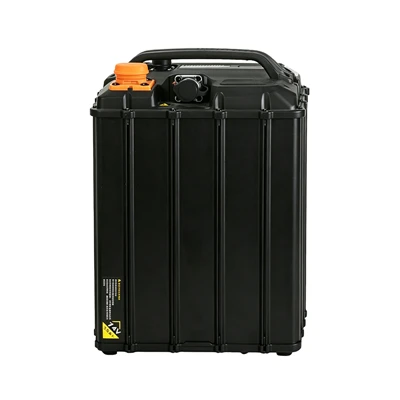
Balancing the charging of multiple electric tricycle batteries is a crucial aspect that directly affects the performance, lifespan, and safety of the batteries. As a supplier of Electric Tricycle Batteries, I’ve witnessed firsthand the challenges and questions customers often have regarding this topic. In this blog, I’ll share some insights and practical tips on how to effectively balance the charging of multiple electric tricycle batteries. Electric Tricycle Battery
Understanding the Basics of Battery Charging and Balancing
Before delving into the methods of balancing multiple battery charges, it’s essential to understand the fundamental concepts of battery charging and why balancing is necessary. Electric tricycle batteries, typically lithium – ion or lead – acid, have a specific charge and discharge cycle. When charging, the battery cells within a battery pack should ideally receive an equal amount of charge. However, due to manufacturing variances, usage patterns, and environmental factors, individual cells can deviate from each other in terms of their state of charge (SOC).
Over time, these differences in SOC can become more pronounced. When some cells reach full charge before others, continued charging can overcharge these cells, leading to reduced battery life, potential safety hazards such as overheating or even fire, and overall decreased performance of the battery pack. This is where the concept of balancing comes in. Balancing is the process of ensuring that all cells in a battery pack reach and maintain a similar state of charge.
Types of Battery Balancing Systems
There are two main types of battery balancing systems: passive and active.
Passive Balancing Systems
Passive balancing systems are the more traditional and cost – effective approach. In a passive balancing setup, excess charge from fully – charged cells is dissipated as heat through resistors. These resistors are connected in parallel with each cell. When a cell reaches full charge, current is diverted through the resistor, effectively slowing down the charging of that cell while allowing the less – charged cells to continue receiving more current.
Passive balancing systems are relatively simple and reliable but have some limitations. They are not very efficient as they waste energy in the form of heat. Additionally, they can be slow in balancing large differences in cell SOC, especially when dealing with multiple batteries.
Active Balancing Systems
Active balancing systems are a more advanced and efficient solution. Instead of dissipating excess charge as heat, active balancing systems transfer charge from high – SOC cells to low – SOC cells. This is typically achieved through electronic circuits that can move charge between cells.
Active balancing systems offer several advantages. They are much more efficient than passive systems as they don’t waste energy as heat. They can also balance cells more quickly, which is particularly important when dealing with multiple batteries or large battery packs. However, active balancing systems are more complex and expensive to implement.
Strategies for Balancing Multiple Electric Tricycle Batteries
As a supplier, I often recommend the following strategies to customers who need to balance the charging of multiple electric tricycle batteries.
Use a Balanced Charger
One of the simplest and most effective ways to ensure balanced charging is to use a charger specifically designed for the type and configuration of your electric tricycle batteries. A balanced charger has built – in circuitry that can monitor and adjust the charge to each individual battery or cell within a battery pack.
When choosing a charger, make sure it is compatible with the voltage, capacity, and chemistry of your batteries. For example, lithium – ion batteries require a different charging algorithm compared to lead – acid batteries. A good quality charger will also have safety features such as over – charge protection and temperature monitoring.
Charge Batteries in Series vs. Parallel
The way you connect your batteries during charging can also affect the balancing process. Batteries can be connected in series or parallel.
When batteries are connected in series, the voltage of each battery adds up, while the capacity remains the same. This means that the same current flows through all the batteries in the series. However, if one battery in the series has a lower SOC than the others, it can become a bottleneck, preventing the other batteries from reaching full charge. To mitigate this, it’s important to use a charger that can balance the charge across the series – connected batteries.
On the other hand, when batteries are connected in parallel, the voltage remains the same, but the capacity adds up. Each battery in a parallel connection receives the same voltage, but the current can be divided among the batteries. This can make it easier to balance the charge, as each battery can charge at its own rate. However, it’s still important to monitor the charging process to ensure that all batteries are charging properly.
Regularly Monitor Battery Health
Regular monitoring of battery health is essential for maintaining balanced charging. You can use a battery management system (BMS) to monitor the SOC, voltage, and temperature of each battery or cell within a battery pack. A BMS can also provide alerts if there are any issues with the batteries, such as over – charging or over – discharging.
In addition to using a BMS, you can also perform regular visual inspections of the batteries. Look for signs of damage, such as swelling, leaks, or corrosion. If you notice any of these signs, it’s important to replace the damaged battery immediately to prevent further problems.
Implement a Battery Rotation System
If you have multiple electric tricycles or a large fleet of batteries, implementing a battery rotation system can help ensure balanced charging and uniform wear and tear. A battery rotation system involves regularly swapping batteries between different tricycles or applications.
By rotating the batteries, you can ensure that each battery is used and charged evenly. This can help prevent some batteries from being over – used or under – used, which can lead to imbalances in SOC.
Real – World Challenges and Solutions
In the real world, there are several challenges that can make it difficult to balance the charging of multiple electric tricycle batteries.
Temperature Variations
Temperature can have a significant impact on battery charging and performance. Batteries charge more efficiently at certain temperatures, and extreme temperatures can cause imbalances in cell SOC. For example, if one battery is exposed to a higher temperature than the others during charging, it may charge faster, leading to an imbalance.
To address this issue, it’s important to charge the batteries in a temperature – controlled environment. If this is not possible, you can use a charger with temperature compensation technology. This technology adjusts the charging current based on the temperature of the battery to ensure a more balanced charge.
Different Usage Patterns
Different users may have different usage patterns for their electric tricycles. Some users may ride longer distances, while others may use the tricycle for short trips. These different usage patterns can lead to differences in battery SOC.
To deal with this, it’s important to educate users on proper battery charging and usage. Encourage users to charge their batteries regularly and avoid over – discharging. You can also provide users with guidelines on how to adjust their charging schedule based on their usage patterns.
Conclusion

Balancing the charging of multiple electric tricycle batteries is a complex but essential task. By understanding the basics of battery charging and balancing, choosing the right balancing system, implementing effective strategies, and addressing real – world challenges, you can ensure the optimal performance, lifespan, and safety of your electric tricycle batteries.
Two Wheeler Battery As a supplier of Electric Tricycle Batteries, I’m committed to providing high – quality batteries and expert advice on battery management. If you’re interested in learning more about our products or need assistance with battery charging and balancing, I invite you to reach out to me for a procurement discussion. We can work together to find the best solutions for your specific needs.
References
- Linden, D., & Reddy, T. B. (2002). Handbook of Batteries. McGraw – Hill.
- Chalk, S., & Veziroglu, T. N. (2001). Fuel Cells: Fundamentals and Applications. Kluwer Academic Publishers.
- Karden, E., & Sauer, D. U. (2015). Battery Systems Engineering. Springer.
Zhuhai Greaton Electronic Technology Co., Ltd.
As one of the most professional electric tricycle battery manufacturers and suppliers in China, we have world-leading production equipment and strong manufacturing capabilities. Please rest assured to wholesale advanced electric tricycle battery in stock here from our factory. Customized orders are welcome.
Address: 2nd Floor, Building A3, No. 6, Liulu, Xinqing Science and Technology Industrial Park, Jing’an Town, Doumen District, Zhuhai City
E-mail: wangchen1@psbattery.cn
WebSite: https://www.cngreaton.com/
