If you’re in the market for Rexroth hydraulic motors, you already know that getting the right external dimensions is non-negotiable—too tight a fit and your entire hydraulic system will grind to a halt; too loose and you’ll face leaks, vibration, or costly breakdowns down the line. As a supplier who’s worked with everything from small farm machinery to giant industrial mining equipment for over a decade, I’ve lost count of how many times customers come to us with a part number but skip the critical step of confirming external dimensions, only to end up with a motor that’s impossible to mount. Today, I’m breaking down the external dimensions of the most popular Rexroth hydraulic motor models, sharing real-world tips I’ve picked up from working directly with installers, maintenance teams, and equipment builders, and helping you avoid the most common mix-ups. Rexroth Hydraulic Motor
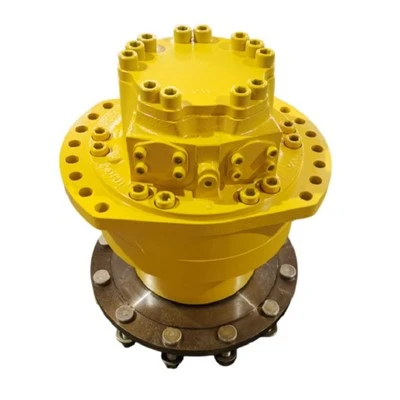
First, let’s get one thing straight: Rexroth doesn’t build hydraulic motors with a one-size-fits-all approach. The company splits its line into three core categories for mobile and industrial use: axial piston motors, radial piston motors, and gear motors. Each category has distinct models tailored to different torque, speed, and space constraints, so their external dimensions vary wildly—something I always emphasize to customers who try to use a generic “similar motor” as a stand-in. Let’s start with the axial piston motors, which are the workhorses of many applications, from construction cranes to agricultural combine harvesters.
The first model most customers ask about is the A6VM series, Rexroth’s mid-range axial piston variable motor, which accounts for roughly 40% of the motors we supply for mobile equipment. Let’s focus on the most common variants: A6VM 55, A6VM 80, and A6VM 107. For the A6VM 55, the external mounting flange diameter is 110 mm, measured from bolt center to bolt center (a key number, because even a 1 mm off bolt pattern means it won’t line up with your gearbox or drive shaft). The overall length from the back of the mounting flange to the end of the output shaft is 132 mm for the standard straight-shaft variant, and 141 mm for the splined output shaft option—this is a detail that trips up so many people, because they assume all output shafts are the same, but splined vs. straight can add 9 mm of length. The bore size of the output shaft on the A6VM 55 is 32 mm for straight, or 35 mm for splined, with four M6 mounting bolts spaced evenly around the flange.
The A6VM 80 is the next step up in torque, and its external dimensions follow a proportional but not identical scaling: the mounting flange diameter is 130 mm, bolt centers at 120 mm, overall length at 151 mm, and output shaft specs jump to 35 mm straight or 38 mm spline, with M8 mounting bolts. I once had a customer who ordered an A6VM 80 expecting it to fit the same mounting footprint as an A6VM 55, and they ended up having to re-drill their entire gearbox mount, costing them two days of downtime on a wheat combine. That’s why I always tell customers to ask for the exact “mounting flange bolt circle diameter” as a separate spec, not just the model number—model numbers give a baseline, but variants add small, costly differences. The A6VM 107, the heav-duty option in this series, has a 150 mm mounting flange, 130 mm bolt centers, 170 mm overall length, and 40 mm straight or 42 mm splined output shafts.
Next up is the A2FM series, Rexroth’s fixed axial piston motor, which is often used for constant-speed applications like conveyor belts or augers. A common mix-up here is confusing A2FM with A6VM, because both are axial piston, but their external dimensions are quite different. For example, the A2FM 63, a popular small fixed motor, has a mounting flange bolt circle of 90 mm, far smaller than the A6VM 55’s 110 mm, and overall length of just 112 mm—way shorter than the A6VM’s 132 mm. That’s because the A2FM is built for higher speed and lower torque than the variable A6VM, so it’s more compact, a tradeoff Rexroth designed intentionally. I always remind customers: fixed axial piston = shorter, smaller flange for same approximate power class, variable axial piston = longer, sturdier flange for adjustability.
Moving beyond axial piston, radial piston motors are the go-to for high-torque, low-speed applications like construction winches or mining haulers. The A2FM series (wait, no—radial piston is the MCR series, my mistake earlier) the MCR series, specifically the MCR 3, MCR 5, and MCR 10, are the most widely used radial piston motors for heavy-duty work. These are bigger, bulkier than axial piston motors, so their external dimensions are a key consideration for tight spaces. The MCR 3, the smallest in the line, has a mounting flange bolt circle of 180 mm, and overall length of 195 mm—way larger than the A6VM 107’s 170 mm length, even though it delivers similar torque. The MCR 5 jumps to a 220 mm bolt circle and 228 mm overall length, and the MCR 10, used for 10,000+ Nm of torque, has a 280 mm bolt circle and 285 mm overall length. I recently supplied an MCR 5 to a mining company that was upgrading their roof bolters, and the original motor they had was an axial piston that kept failing under the low-speed high-torque load—they thought the footprint would fit, but the MCR’s larger flange meant they had to modify the mount slightly, which we helped them plan for ahead of time by sharing the exact bolt circle dimensions in our pre-sale consultation. That’s the value of working with a supplier who doesn’t just pull numbers from a spec sheet, but knows how these dimensions translate to real equipment.
Then there’s the gear motor line, the simplest and most affordable Rexroth motor option, used for light-duty applications like pallet jacks, small conveyors, and lawn equipment. The Rexroth 1PF series is their main gear motor line, and their external dimensions are much more consistent than piston motors, but still have critical nuances. The 1PF 2, the smallest gear motor, has a mounting flange bolt circle of 80 mm, overall length of 92 mm, and output shaft diameter of 20 mm. The 1PF 4, the most common, has a 100 mm bolt circle, 110 mm overall length, and 25 mm output shaft. What most people don’t realize is that gear motors are often paired with a gear reducer, so the overall length when combined with the reducer is not just the motor’s length—this is a huge mistake for anyone fitting gear motors into compact, space-constrained designs. I had a customer building a line of automated warehouse palletizers who ordered 1PF 4 motors and forgot to account for the reducer’s length, so when they arrived, the motor plus reducer stuck out 3 inches more than their design allowed, and they had to rework their entire conveyor frame. That’s why we always provide the full “stacked” dimension for gear motor + reducer assemblies, not just the motor alone.
Now, I want to talk about the biggest source of confusion when it comes to Rexroth motor dimensions: variants and optional accessories. Rexroth offers almost every model with optional ports, output shaft types, and mounting flanges, which can change external dimensions by 5-20 mm, even for the same model number. For example, the A6VM 80 we discussed earlier: if you choose the SAE A mounting flange instead of the standard metric flange, the bolt circle jumps from 120 mm to 130 mm, and overall length increases by 12 mm because the SAE flange has a thicker mounting surface. Another common optional is a brake module—adding a hydraulic or mechanical brake to the back of the motor can add 40-60 mm to the overall length, which is a showstopper if you’re working with a fixed compartment. I once had a customer who ordered an A2FM 63 with a standard output shaft, but they needed a spring-applied brake for a conveyor that had to stop within 2 seconds. They didn’t mention the brake in their initial order, and when we shipped the motor, the extra 50 mm of length meant it couldn’t fit in the space allocated for the un-braked version. We ended up working with Rexroth to source a slightly smaller brake module, but it took a week longer than expected, and they lost a day of production waiting for the custom part. That’s why asking about optional accessories up front isn’t just a nice-to-have—it’s essential.
Another point that isn’t always clear from Rexroth’s published spec sheets: dimension measurement standards. Rexroth uses two primary standards for external dimensions: metric (mm) for most global markets, and SAE (inch-based) for North American applications. A lot of customers mix these up—for example, the A6VM 55’s SAE variant has a bolt circle of 4.33 inches, which converts to 110 mm, so the number is the same, but the A6VM 80’s SAE variant has a bolt circle of 5.12 inches, which is only 130 mm metric, so that checks out, but the overall length of the SAE A6VM 80 is 6.3 inches, which is 160.02 mm, versus the metric version’s 151 mm. The 9 mm difference is tiny on paper, but when you’re squeezing a motor into a 155 mm space, it’s the difference between a working fit and a motor that won’t mount at all.
So, what do I recommend if you’re trying to confirm the external dimensions of a Rexroth hydraulic motor? First, never rely on a model number alone. Ask for three specific numbers from your supplier: mounting flange bolt circle diameter (both bolt hole centers and overall flange outer diameter), overall length from mounting flange face to output shaft end, and output shaft specs (diameter, spline count, whether it’s straight or keyed). Second, specify any optional accessories you need—brakes, different ports, SAE vs. metric flanges—before you get a quote. Third, if you’re replacing an old motor, measure the old motor’s dimensions yourself, and cross-reference them with the new model, because old equipment sometimes has custom mounts that aren’t exactly to Rexroth’s original specs.
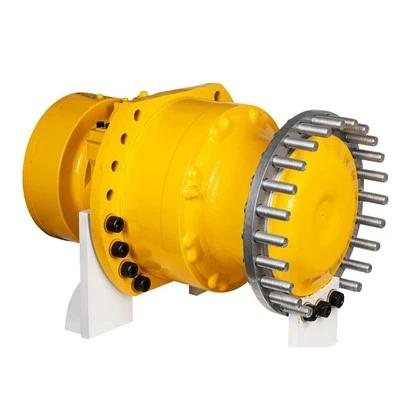
At the end of the day, getting the external dimensions right is half the battle when it comes to Rexroth hydraulic motors. The best motor in the world won’t work if it can’t fit in your equipment. As a supplier, my job isn’t just to sell you a motor—it’s to make sure it works for your application, and that means walking through these dimension details with you, answering every question, and making sure there are no surprises when the part arrives. If you’re working on a project that needs Rexroth hydraulic motors, whether it’s a small lawn equipment build or a large mining fleet upgrade, don’t leave dimension details to chance. Reach out to talk through your needs, and I’ll help you find the right motor with the exact dimensions you need.
Auger Drill References:
Bosch Rexroth AG. Hydraulic Motors: Axial Piston, Radial Piston, and Gear Motor Series Specification Sheets. 2022.
Mobile Hydraulic Equipment Association (MHEA). Standard Dimension Specifications for Off-Highway Hydraulic Components. 2021.
Industrial Hydraulic Association (IHA). Mounting and Dimension Standards for Industrial Hydraulic Motors. 2020.
Ningbo Oushijie Hydraulic Transmission Co., Ltd.
Ningbo Oushijie Hydraulic Transmission Co., Ltd. is one of the most professional rexroth hydraulic motor manufacturers and suppliers in China, also supports customized service. With abundant experience, we warmly welcome you to wholesale durable rexroth hydraulic motor at competitive price from our factory.
Address: Changshi Sanxing Industrial Zone, Jiulong Lake Town, Zhenhai District, Ningbo,Zhejiang, China
E-mail: yong@nbosj.com
WebSite: https://www.nbosj.com/
